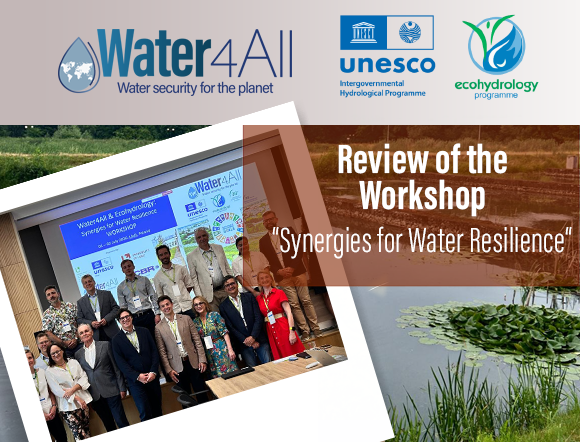
The Water4All and Ecohydrology: "Synergies for Water Resilience" workshop was held in Lódź, Poland, last July.
The three objectives
The workshop was organized around different objectives, making sense all together for this 2-day event
► Explore synergies between Water4All projects and the UNESCO IHP Ecohydrology Programme, with a focus on Nature-based Solutions (NbS) & water resilience.
► Discuss how Water4All projects can strengthen their contribution to the Sustainable Development Goals (learn more on the SDGs: link here)
► Celebrate the 30th anniversary of the UNESCO Ecohydrology Programme and the 20th anniversary of the UNESCO Ecohydrology Demonstration Sites.
First day: presentations & discussions
Opening messages and discussions focused on transdisciplinary ecohydrology, the vision and future of the Water4All Partnership, perspectives on SDGs and laid the foundation for the discussion of Water4All projects' contribution to the 2030 agenda. For instance, the Springiness project could present its objectives and results! (link to the project page)
Second day: visit to a site with NbS
The visit to the UNESCO Ecohydrology Demonstration Site in Radom is a perfect real demonstration of actions that can be done (Link here). Here, the LIFE RadomKlima project has implemented urban ecohydrological solutions, a wide range of Nature-based Solutions (NbS). From rain gardens and fish passes to large flood polders and treatment wetlands, demonstrating an ecohydrological approach to build water security in urban catchments.
For instance, the blue-green infrastructure that has transformed the "Milky River" corridor into a living example of how Nature-based Solutions can:
► improve water quality,
► restore biodiversity,
► increase urban resilience,
► create tangible benefits for local communities.
More than five years after their implementation, despite record-breaking temperatures and an intense heatwave in Poland, these NbSs continue to demonstrate their effectiveness and resilience.
What next, after the Workshop?
The collaboration does not end here. As a follow-up to the meeting, other actions are being prepared:
► a joint report on the contribution of Water4All projects to the SDGs and UNESCO initiatives,
► a Special Issue of Ecohydrology & Hydrobiology Elsevier dedicated to Water4All projects, ecohydrology, and sustainable water management.